Climate Change Opinion Survey
This dataset provides valuable insights into public opinions on climate change, capturing a range of attitudes and perceptions from participants across various regions.
About
Climate change awareness and action are increasingly recognized as essential global challenges, with the public's understanding, attitudes, policy preferences, and behaviors playing a crucial role in shaping environmental strategies. This dataset, sourced from the 2022 Climate Change Opinion Survey, sheds light on these aspects by capturing aggregate responses on how individuals perceive climate change, their willingness to take action, and their views on policy solutions. Public knowledge about climate change, as well as the willingness to adopt sustainable behaviors, is strongly influenced by factors such as media exposure, education, and regional environmental issues.
By analyzing patterns in public opinion, this dataset reveals the key factors driving concern and action on climate change, such as the connection between increased exposure to climate-related information and heightened levels of worry.
A particularly insightful aspect is the exploration of regional variations within Africa, where local environmental issues, media coverage, and socio-economic conditions influence the awareness and responses of different populations. Understanding these regional dynamics is essential for developing tailored communication strategies and mobilizing communities to take effective action, ensuring that climate responses are both relevant and impactful across diverse contexts.
Impact of Climate Change Awareness on Levels of Worry in North and East Africa

The map highlights significant regional differences in climate change awareness and concern between North Africa and East Africa. In Egypt, only 21.9% of respondents report being exposed to information about climate change at least once a month, compared to 34.5% in Tanzania. This increased awareness in Tanzania correlates with a much higher level of concern about climate change, with 48.8% of respondents expressing strong worry ("very worried"), compared to just 21.64% in Egypt.
These disparities can be attributed to various factors, including differences in media coverage, government engagement, and the direct impacts of climate change.In East Africa, countries like Tanzania are experiencing more immediate climate-related challenges such as droughts and floods, which directly affect livelihoods and agriculture, making climate change a more pressing issue.
In contrast, North Africa, may have a less visible or more gradual impact of climate change on daily life, which may result in lower levels of wory. While the effects of climate change are not confined by borders, the way they manifest and the visibility of these impacts can influence public concern, as demonstrated by these contrasting regional perspectives.
Public Willingness to Join Climate Action Efforts in Sub-Saharan Africa
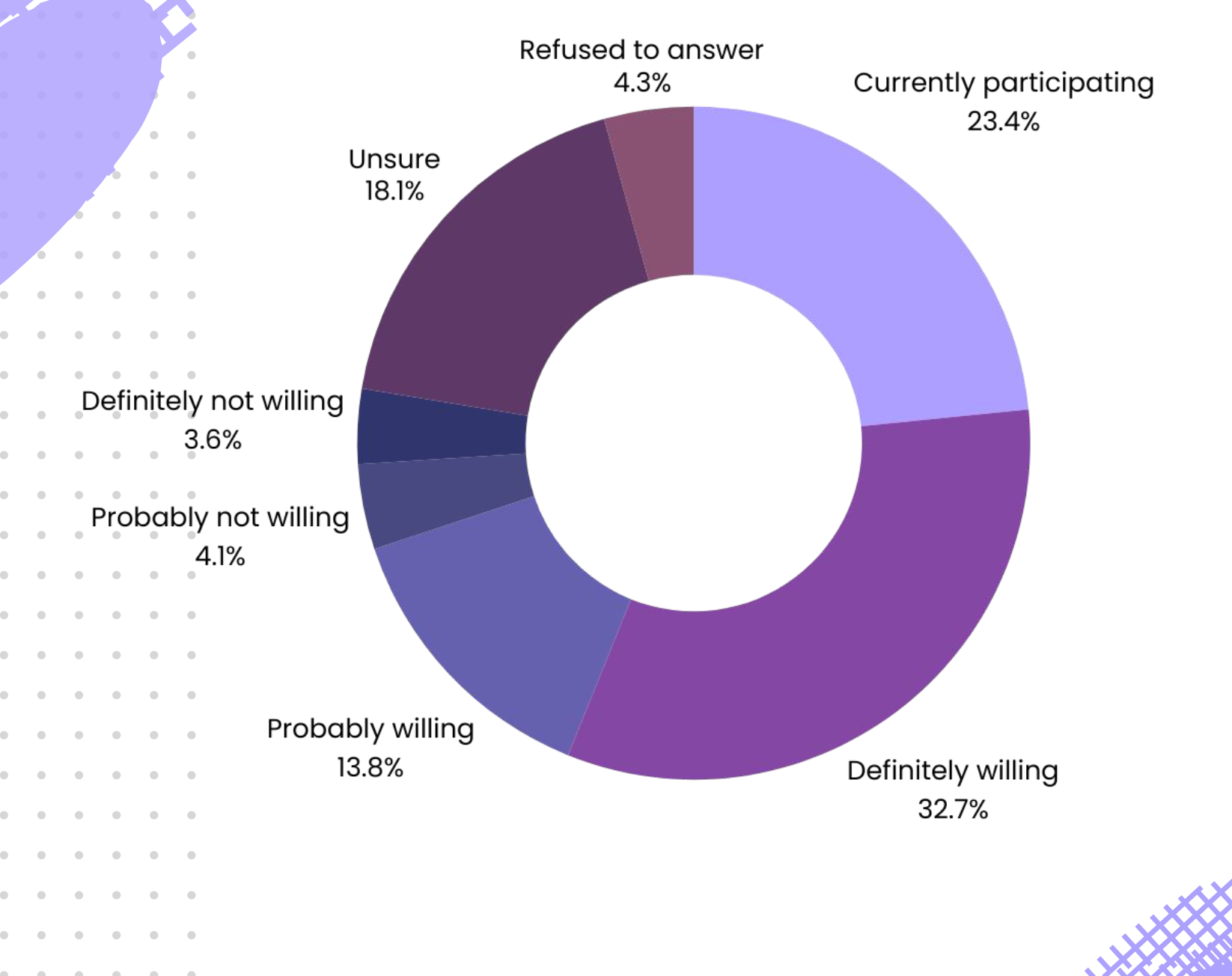
The graph highlights a strong willingness in Sub-Saharan Africa to engage in organized efforts for climate action, with 23.4% of respondents already participating and 32.7% expressing a definite interest in joining. While a smaller portion (18.1%) remain unsure, only 7.7% show a clear unwillingness, indicating a significant potential for mobilization and public support for climate initiatives in the region.
This high level of engagement could stem from a growing awareness of the direct impacts of climate change on livelihoods, particularly in agricultural sectors, as well as a desire for proactive action to mitigate its effects. The relatively low opposition suggests that many individuals are open to contributing to climate solutions, provided they feel supported by collective efforts.
The dataset includes aggregate response data from the 2022 Climate Change Opinion Survey, a collaboration between the Yale Program on Climate Change Communication and Data for Good at Meta.
Yale, Meta Data For Good
Use Cases
Designing Targeted Climate Communication Campaigns: By analyzing the dataset, organizations can craft region-specific climate communication strategies that resonate with local populations. Understanding the frequency of exposure to climate change information and regional concerns allows for the development of tailored messaging, using the most relevant channels (social media, TV, community discussions) to increase awareness and motivate action.
Assessing the Impact of Climate Education Programs: The dataset can be used to evaluate the effectiveness of climate education programs in different regions. By comparing levels of worry and engagement in areas with active climate education campaigns versus regions without such initiatives, stakeholders can measure the direct impact of these programs and adjust their strategies accordingly.
Predicting Future Climate Activism Trends: Using the willingness data, researchers can predict future trends in climate activism across Sub-Saharan Africa. Understanding the correlation between the exposure to climate change information and the willingness to take action helps in forecasting which areas may see a rise in grassroots movements, enabling early interventions and support for emerging climate leaders.
Limits
Cultural and Regional Influences: The dataset relies on survey responses that may reflect regional and cultural variations in attitudes toward climate change. Differences in education, information access, and local concerns could introduce biases, making it challenging to apply the findings universally across Sub-Saharan Africa.
Technological Access and Socio-economic Disparities: Variations in access to technology, such as internet connectivity, and socio-economic conditions across Sub-Saharan Africa may affect participation in the survey. These disparities, particularly between urban and rural areas, can result in uneven representation, influencing the reliability and broader applicability of the results.
Temporal Relevance: Given that the dataset is based on a single survey period, it may not capture the evolving nature of climate change awareness and willingness to act over time. Changes in political leadership, economic conditions, or climate events could lead to shifts in public sentiment, making the dataset less reflective of current trends or future behavior.

